Creatine for Brain Health: The Hidden Engine Behind Focus & Mental Energy
Why your focus isn’t broken — your brain energy is
Most days don’t feel dramatically bad. They just feel slightly off. You sit down to work, but your brain takes longer to warm up. You reread things. You lose your train of thought. You switch between tasks more than you’d like.
It’s easy to call this distraction. Or burnout. Or lack of discipline. But what if none of those are the real problem?
Your brain isn’t failing — it’s running out of energy.
What is creatine and how does it support brain energy?
Creatine is widely known as a supplement for strength and performance. But beyond muscle, creatine plays a critical role in cellular energy production, especially in the brain.
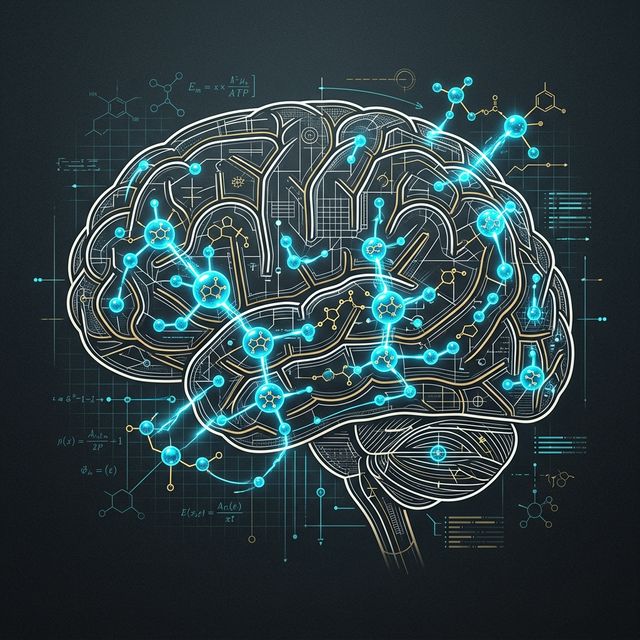
Your brain relies on ATP (adenosine triphosphate) — the primary energy molecule that powers every thought, memory, and decision. The challenge is that ATP gets depleted quickly, particularly during deep work, stress, and long cognitive sessions.
Creatine helps regenerate ATP through phosphocreatine, acting as a rapid energy reserve. Creatine exists to maintain brain energy when demand is highest.
Why your mental performance feels inconsistent
Some days you feel sharp. Other days, mentally drained. This fluctuation is often tied to brain energy availability, not motivation. Factors like poor sleep, stress, and workload increase cognitive demand, leading to faster depletion of ATP.
This is where creatine for brain function becomes relevant. By supporting energy regeneration, creatine helps stabilize mental performance across the day. It’s not about enhancing your best state — it’s about reducing cognitive crashes.
Creatine vs caffeine for focus
Most people turn to caffeine or nootropics to improve focus. While these can increase alertness, they do not address the underlying issue of low cellular energy. Caffeine stimulates the system. Creatine supports it.
If your brain lacks energy, stimulation alone can lead to burnout rather than sustained performance. You can’t fix energy deficits with stimulation.
Who should consider creatine for cognitive support
Creatine supplementation may be especially beneficial if you experience mental fatigue or brain fog, work long hours or perform deep cognitive work, have inconsistent sleep patterns, follow a vegetarian or low-meat diet, or operate in high-stress environments.
In these cases, improving brain energy can lead to more consistent focus and reduced fatigue. Creatine matters more when your system is under pressure.
The bigger insight: brain function is an energy problem
Most people try to improve focus with tools, systems, and productivity hacks. But cognitive performance starts at a deeper level. Your brain depends on stable energy. When that energy drops, performance follows.
Creatine supports this foundational layer, making it one of the most overlooked brain health supplements. Not a shortcut. Not a hack. Just a more stable system.
References
- [1]Rae C, et al. Oral creatine monohydrate supplementation improves brain performance. Proc R Soc B. 2003.
- [2]Rawson ES, Venezia AC. Use of creatine in the elderly and evidence for effects on cognitive function in young and old. Amino Acids. 2011.
- [3]Avgerinos KI, et al. Effects of creatine supplementation on cognitive function of healthy individuals. Exp Gerontol. 2018.
- [4]Benton D, Donohoe R. The influence of creatine supplementation on the cognitive functioning of vegetarians and omnivores. Br J Nutr. 2011.
Ready to add this to your stack?