Amino Acid Spiking: Is Your Protein Powder Fake? India Guide 2026
The Chemistry of Deception
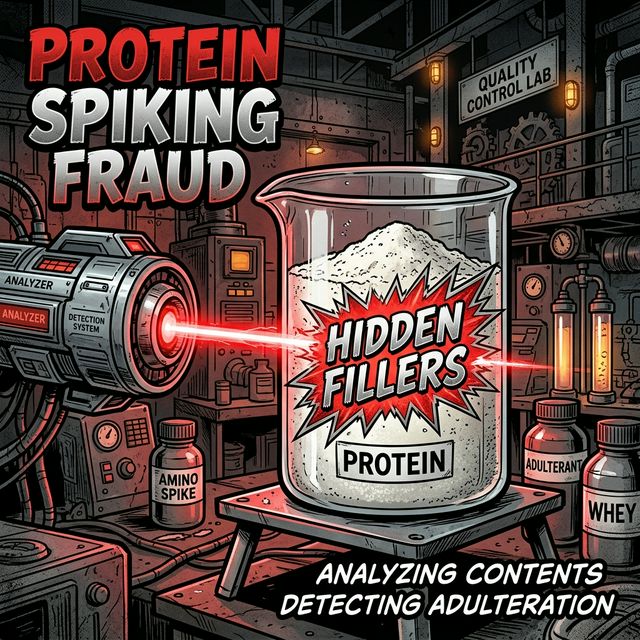
In the supplement industry, 'Amino Spiking' (or Nitrogen Spiking) is a widespread cost-cutting tactic. standard laboratory tests measure protein by measuring nitrogen content. Scrupulous manufacturers exploit this by adding cheap, non-essential amino acids like Taurine, Glycine, or Creatine—which are nitrogen-rich—to the powder.
The result? The label shows 25g of protein, but your body only receives 15g of actual whey protein. The rest is filler that won't support muscle protein synthesis.
How to Spot the Spike
Identify brands that list 'proprietary amino blends', contain high amounts of taurine/glycine in a whey product without clear dosage, or seem suspiciously cheap compared to high-quality alternatives.
The Vetted Standard
Spottr only curates protein sources with a verified 'Certificate of Analysis' that confirms the full amino acid profile. We treat protein not just as a macronutrient, but as a biological building block that must be pure to be effective.
References
- [1]Phillips SM, et al. The role of milk- and soy-based protein in support of muscle protein synthesis. J Am Coll Nutr. 2009.
- [2]Gorissen SHM, et al. Protein content and amino acid composition of commercially available plant-based protein isolates. Amino Acids. 2018.
- [3]Tang JE, et al. Ingestion of whey hydrolysate vs casein stimulates muscle protein synthesis. J Appl Physiol. 2009.
Ready to add this to your stack?