Whey Protein Price in India 2026: Real Cost Per Kg, Compared

Why Whey Protein Prices in India Make No Sense
Open any store and you will see one whey protein at ₹2,999 and another at ₹7,099. One shows 47% off, another 3% off. A 2 lb tub sits next to a 5 lb tub. Comparing them by the sticker price is like comparing petrol prices by the size of the tank.
Compare the price per kg, not the discount.
The Only Number That Matters: Price Per Kg
Divide the selling price by the weight in kilograms. Pack sizes in India are often listed in pounds, so here is the quick conversion: 1 lb is about 0.45 kg. That makes 2 lb about 0.9 kg, 4.4 lb about 2 kg, and 5.28 lb about 2.4 kg.
A discount percentage only compares the price with the MRP printed for that one tub, and MRPs vary a lot between brands. For example, Ronnie Coleman Pro-Antium is 21% off and costs about ₹3,300 per kg. Cellucor C4 Whey is 30% off and costs about ₹4,300 per kg. The bigger discount is the more expensive powder per kg.
Whey Protein Price Per Kg in India, October 2026
These are the selling prices on Spottr on 29 October 2026, and they can change. Weights are converted from the pack size. We sell these products, so we show our own prices. Use the same method to compare them with any other store.
13 Lives Whey Protein, 4.4 lb (about 2 kg): ₹4,499, about ₹2,250 per kg.
Kevin Levrone Levro Whey Supreme, 4.4 lb (about 2 kg): ₹4,999, about ₹2,500 per kg.
Ultimate Nutrition Prostar 100% Whey Protein, 5.28 lb (about 2.4 kg): ₹7,099, about ₹2,960 per kg.
Ronnie Coleman Pro-Antium Whey Protein, 2 lb (about 0.9 kg): ₹2,999, about ₹3,300 per kg.
Cellucor C4 Whey Protein, 1.8 lb (814 g): ₹3,500, about ₹4,300 per kg.
Optimum Nutrition Gold Standard 100% Whey, 2 lb (about 0.9 kg): ₹4,299, about ₹4,740 per kg.
Notice the pattern: the 4 to 5 lb tubs cost far less per kg than the 2 lb tubs. Pack size changes the price per kg more than almost anything else.
Price Per Kg Is Not the Whole Story: Cost Per Serving
Powders differ in how much protein is in each scoop, so the cost that really matters is the cost of the protein you eat. Here is the math with a real label. Cellucor C4 Whey lists 25 g of protein per scoop and 22 servings in the 814 g tub. At ₹3,500, that is about ₹160 per serving, or about ₹6.4 per gram of protein.
To do it for any tub, divide the price by the number of servings, then divide by the grams of protein per serving. Check the label of the exact pack you are buying, because flavours and pack sizes can differ.
What Price Is Too Cheap?
Whey is made from milk, and good whey costs real money to make. A price far below the market for a known brand is a reason to check, not a reason to celebrate. Before you buy any tub, check these:
FSSAI licence number: 14 digits on the label, which you can verify on foscos.fssai.gov.in. Sealed original packaging: an intact seal, with a batch number and expiry date you can read. Brand authenticity: many brands print a verification code or QR on the tub. A real seller: a company address, customer support and a clear return policy.
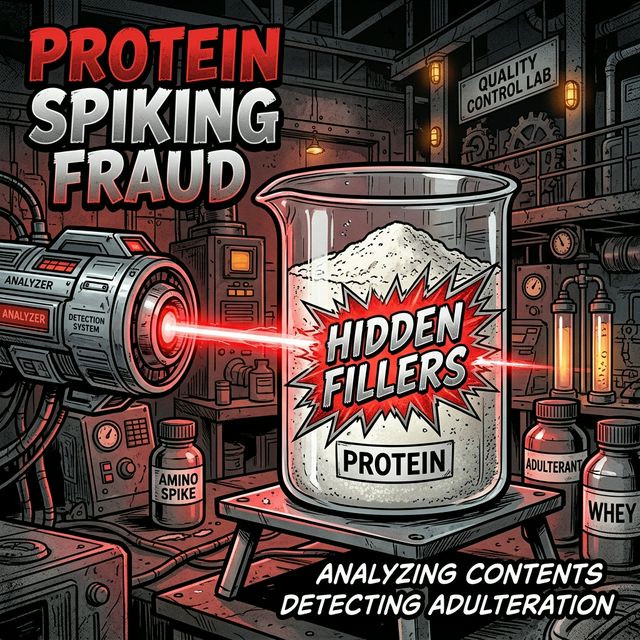
Our whey protein vs isolate guide covers amino spiking, where cheap amino acids are added to make a label look higher in protein. A good price does not matter if the label is not honest.
Which Tub Size Should You Buy?
If you already use whey and like the flavour, the bigger tub usually wins on cost. In the list above, the 2 kg tubs run roughly ₹2,250 to ₹2,500 per kg, while the 2 lb tubs run roughly ₹3,300 to ₹4,740.
If you are trying a new brand or flavour, buy a small tub first. Check the expiry date and buy only what you can finish in time. At one scoop a day, a 2 kg tub lasts roughly two months.
How Much Protein Do You Actually Need?
Research on people who lift weights suggests that the benefit of extra protein levels off at around 1.6 g per kg of bodyweight per day. Sports nutrition guidelines commonly give a range of 1.4 to 2.0 g per kg. For a 70 kg person, that is roughly 100 to 140 g a day.
Food comes first: dal, paneer, eggs, curd, chicken and soy all count. Whey is a convenient way to fill the gap, not a requirement.
Build Around It: A Simple Starter Stack
Most people who add whey also look at two basics. Creatine monohydrate, 3 to 5 g a day, is the most researched supplement for strength and training. A multivitamin can help if your diet has gaps. Our creatine price guide shows what fair pricing looks like there.
Not sure what you need? Spottr's quiz builds a starter stack from your goal, diet and budget, so you are not guessing.
The best whey is the one with a fair price per kg, a label you can trust, and a tub size you will actually finish.
References
- [1]Jäger R, et al. International Society of Sports Nutrition Position Stand: protein and exercise. J Int Soc Sports Nutr. 2017.
- [2]Morton RW, et al. A systematic review, meta-analysis and meta-regression of the effect of protein supplementation on resistance training-induced gains in muscle mass and strength. Br J Sports Med. 2018.
- [3]FSSAI. Food Safety and Standards (Health Supplements, Nutraceuticals, Food for Special Dietary Use) Regulations 2022.
Shop the whey proteins in this guide